
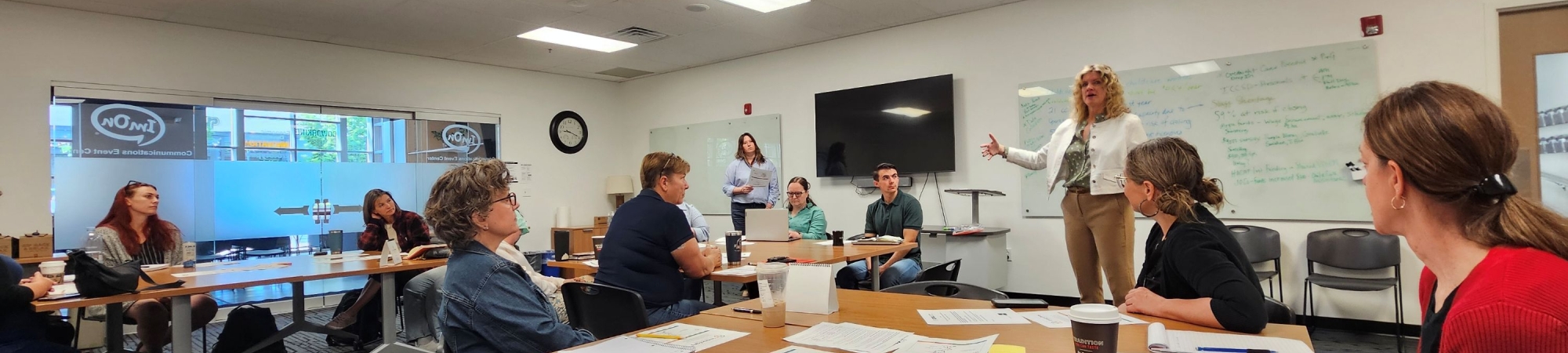
Child Care Solutions Coalition Strategic Doing Session
In May, United Way convened community leaders, employers, nonprofit partners, educators, providers, and advocates for a Strategic Doing session with the Child Care Solutions Coalition focused on one urgent question: What would it look like for Johnson County to build a high-quality, affordable child care system—powered by public, private, and community partnerships—that enables children, families, providers, and the community to thrive?
Access to affordable, quality child care was identified in United Way’s community needs assessment as one of the most significant barriers facing local families. And the challenges continue to grow. Johnson County’s already fragile child care system has been pushed further into crisis this year, with 21 child care centers or registered homes closing in 2025 alone. At the same time, the average annual cost of care for a household with an infant and a three-year-old has climbed to nearly $31,000, placing an enormous strain on working families. Providers are also under pressure, with 63% of centers serving infants reporting they are operating at a loss and are at risk of closing.
During the session, partners engaged in honest conversations about the realities families and providers are facing and began identifying opportunities for collective action. Together, participants explored how public, private, and community partnerships can help strengthen the child care ecosystem, support providers, and create sustainable solutions that allow children, families, businesses, and our economy to thrive.
United Way believes that lasting solutions to complex community challenges are built through collaboration, trust, and shared responsibility. The Johnson County Child Care Solutions Coalition is moving beyond conversation and into action by bringing together partners committed to strengthening our local child care system. In the months ahead, the coalition will focus on raising awareness about the unique challenges facing families and providers in our community, exploring solutions to address the growing shortage of infant care, and gathering data to help shape public policy recommendations that can reduce barriers and create a more sustainable child care system for everyone.
This collaboration was funded by ECICOG and facilitated by Jennifer Horn Fraiser and Kate Moreland.